Digital Grief is Real: Why UX Designers Need to Talk About Death
Grief in the digital age is reshaping how we mourn, remember, and interact with the memories of the deceased. In this article, Chehan Gamage, a Sri Lankan UX designer, explores why death and grief must become part of the UX design conversation and how digital products can evolve to support users emotionally during loss.

Grief in the digital age is reshaping how we mourn, remember, and interact with the memories of the deceased. In this article, Chehan Gamage, a Sri Lankan UX designer, explores why death and grief must become part of the UX design conversation and how digital products can evolve to support users emotionally during loss.
Death Isn’t Just Offline Anymore
In today’s world, we don’t just live our lives online we also die there. Our digital presence often outlives us: social media profiles remain, photo albums get reshared, and old messages suddenly resurface. But while technology has evolved in leaps and bounds, our user experiences around grief and mourning have not.
As a UX designer and researcher working at the intersection of emotion and technology, I believe this is a conversation we can no longer avoid:
What does grief look like in the digital age?
And how can UX design evolve to acknowledge death, not ignore it?
Why UX Designers Need to Consider Death
1. Grief is an Emotional Journey and UX is Emotional
UX design isn’t just about flowcharts and button placements. It’s about how people feel when they interact with digital spaces. If we consider joy, convenience, frustration, and motivation in our design process, why are we not considering grief one of the most powerful human emotions?
In my dissertation, I explored how Sri Lankan users especially those who’ve lost parents struggle with digital spaces that unintentionally reopen wounds. Whether it’s Facebook’s “On This Day” feature showing a dead parent’s photo, or TikTok serving old voice clips, these moments are often emotionally jarring.
Yet these experiences are real.
And they are UX failures, because they disregard the user’s emotional state.
2. Social Media is Becoming the New Graveyard
We’ve normalized mourning in digital spaces, but platforms haven’t caught up.
Facebook lets you memorialize an account, but the interface barely changes.
Instagram DMs with deceased loved ones remain in inboxes, with no indicators.
TikTok videos continue to resurface from deceased creators, often without context.
These platforms are designed for engagement—not empathy. But grief doesn’t follow engagement logic. It requires softer, slower, more human UX approaches.
3. Most Products Are Built for the Living, Not the Bereaved
Almost every digital platform is designed assuming the user is alive, healthy, and emotionally neutral. But as my research has shown, there’s a growing need for death-aware UX, interfaces and features that account for:
Sudden loss of a loved one
Periodic grief triggers (birthdays, anniversaries)
Users who are terminally ill or preparing for death
Those navigating legacy management or digital memories
Ignoring this segment means excluding millions of emotionally vulnerable users.
Patterns I’ve Observed as a UX Researcher
During my qualitative interviews with Sri Lankan users dealing with grief, I noticed key patterns:
Emotional Disruption: Sudden exposure to old memories without context was often described as “digital slaps.”
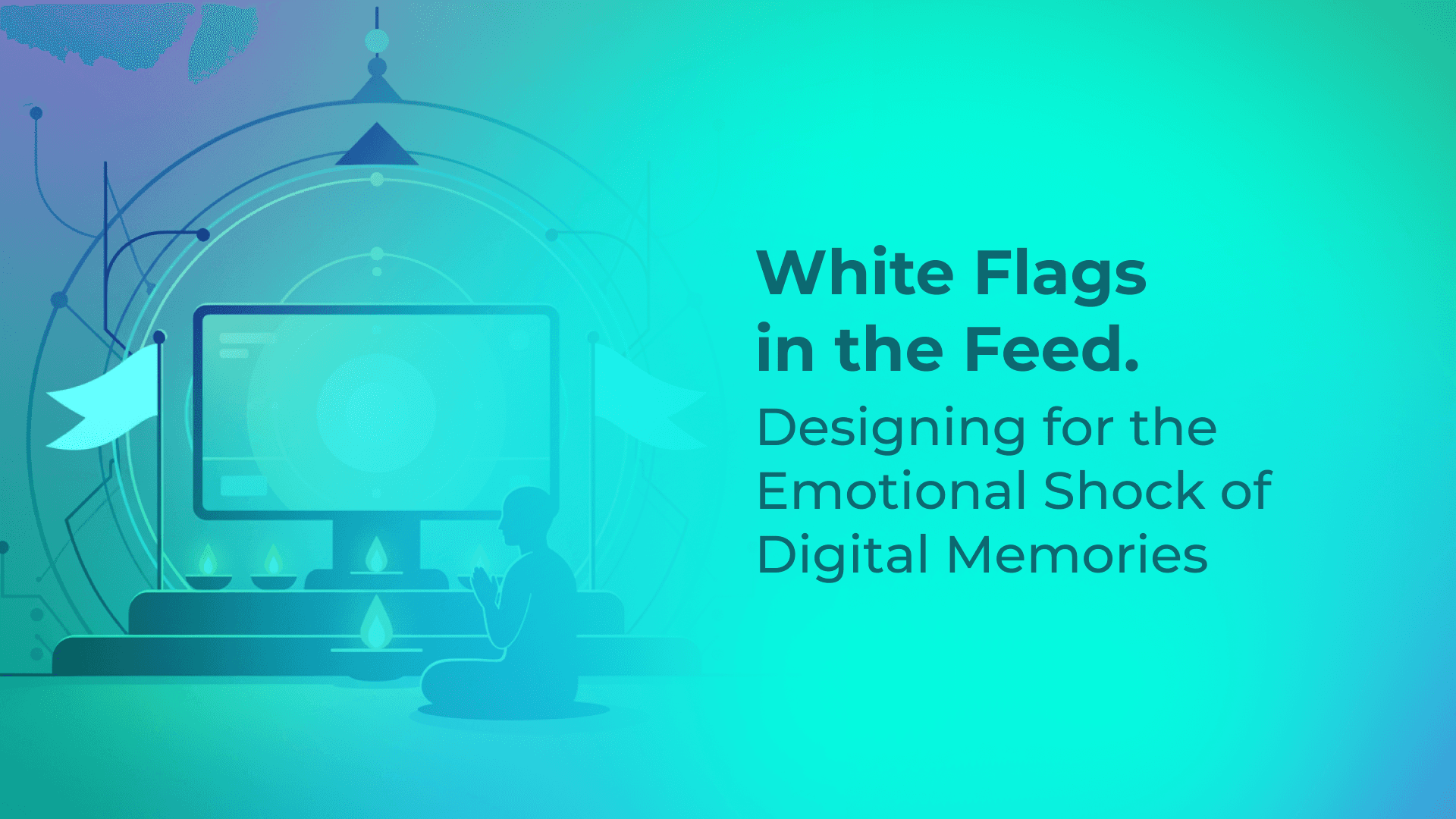
Lack of Ritual Space: No digital space allowed users to grieve in culturally resonant ways (e.g., virtual white flags, Buddhist prayers).
Need for Control: Many wanted to decide what happens to their content after death, but platforms gave them no voice.
These aren’t just emotional pain points, they’re design challenges.
What Designers Can Do Right Now
Here are a few immediate UX takeaways from this research:
Problem | UX Opportunity |
|---|---|
Sudden resurfacing of memories | Let users mute or soften memory notifications during grief periods |
No cultural mourning features | Build culturally-sensitive themes or rituals into remembrance pages |
No preparation tools | Allow users to pre-set digital legacies, posthumous messages, or guardians |
Emotionally jarring interfaces | Design soft UIs, use calm microinteractions, and avoid harsh language in death-related prompts |
Designing for Life Means Designing for Loss
As UX designers, we often pride ourselves on designing for joy, flow, and productivity. But true empathy means designing for the darkest parts of the human experience too.
Grief doesn’t follow neat user journeys or conversion funnels. It’s messy. It’s silent. It’s human.
If we don’t create space for it in our interfaces, we are not building for the whole person—we’re only building for their best days.
But grief doesn’t exist in isolation, it lives in the digital spaces we use every day.
The next time you open Facebook or TikTok, ask yourself:
What happens when an algorithm brings someone back who is no longer here?
Memorialized Feeds & Algorithmic Grief: When Social Media Meets Mourning
In the next article, I’ll explore how social media platforms unintentionally become digital memorials, and how features like auto-generated memories and resurfaced videos can trigger emotional distress. We’ll break down how algorithms shape our grieving, and what designers can do to reduce harm and foster healing.
Chehan Gamage UI/UX Designer | Founder of Mintleaf Digital | B.Des (University of Moratuwa)